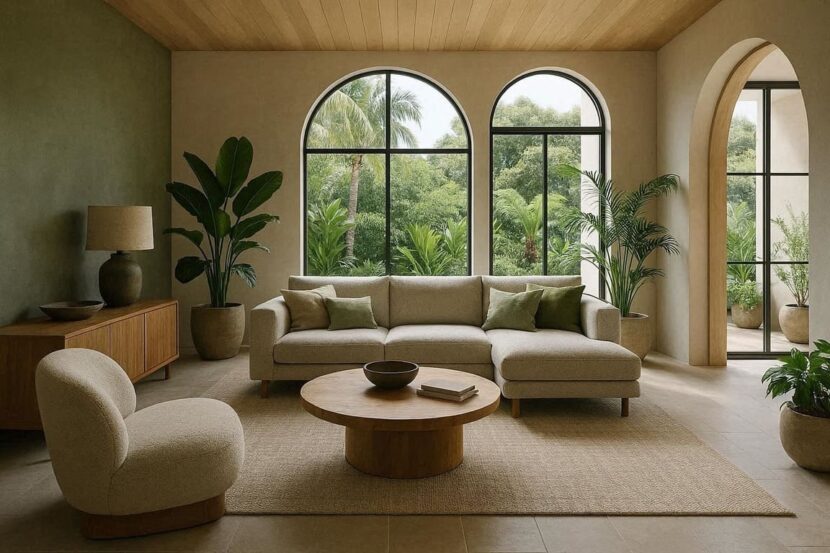
If you’ve been spending more time at home lately (and let’s be honest, most of us have), you’ve probably started noticing what’s working in your space — and what really isn’t. The good news? New Zealand interior design in 2026 is moving in a direction that feels genuinely liveable. Less “showroom perfect,” more “I actually want to be here.”
This isn’t a list of trends imported wholesale from Milan or Manhattan. These are the shifts happening in real Kiwi homes right now — informed by our landscape, our culture, and the way we actually live. Whether you’re mid-renovation or simply thinking about refreshing a room, here’s what’s shaping New Zealand interiors in 2026.
What’s Driving the Change?
Before we get into specifics, it’s worth understanding why Kiwi interiors are shifting the way they are.
The short answer: people are tired of spaces that perform well on Instagram but feel cold and impersonal to actually live in. Interior design in 2026 is not about dramatic statements or fast-moving trends — the shift is toward spaces that feel calm, grounded, and genuinely supportive of everyday life.
There’s also a growing sense that New Zealand homeowners want interiors that feel ours — rooted in local materials, local makers, and a distinctly Kiwi relationship with the outdoors. What competitors in the space often miss is that Kiwis don’t just want to follow global trends — they want to adapt them into something that fits this place specifically. That nuance matters.
1. Warm Neutrals Are Replacing Cold Minimalism
The cool, blue-toned greys and stark white-on-white interiors that defined the 2010s are finally — mercifully — fading. In their place, something warmer and more considered.
New Zealand homes are embracing warm whites, soft taupes, muted greens, and light timber tones that echo the surrounding landscape. This isn’t the absence of personality — it’s warmth as a design choice.
Dulux is promoting what it calls earth-based neutrals: warm, comforting shades of rich burnt oranges, caramels, and a green palette of sage, moss, and spearmint. Resene has followed a similar path, leaning into depth and richness over flatness.
What this looks like in practice:
- Limewash or textured paint finishes rather than flat emulsion
- Layering warm tones across a room rather than committing to one bold statement
- Soft earthy pinks paired with browns and burgundy — a pairing that sounds risky but reads beautifully in person
- Moving away from matching everything, and toward rooms that feel collected over time
The shift is subtle but significant. It’s the difference between a room that photographs well and a room that actually makes you exhale when you walk in.
2. Blue Is the New Green
Here’s one that might surprise you. As green fades from the forefront, blue is emerging as a defining colour for 2026. It’s the resurgence of richer, moodier blues that’s reshaping interiors — from powder-blue bathroom vanities to deep navy libraries.
Blue is having this moment because of its versatility. It reads as coastal without being nautical. It’s calming without feeling cold. And in a country with as much coastline as New Zealand, it connects to something deeply familiar without being literal about it.
Dulux’s 2026 palette spotlights atmospheric blues, including the vibrant cobalt “Free Groove” and the stormy grey-blue “Slow Swing.”
If you’re nervous about committing to a full blue room, start with cabinetry. A deep navy kitchen island or a dusty blue bathroom vanity can completely transform a space without requiring a full repaint. Pair it with warm timber, aged brass hardware, and natural stone, and you’ve got something genuinely special.
3. Texture Is Everything (And Then Some)
If there’s one word that defines Kiwi interiors in 2026, it’s texture. Not colour. Not furniture. Texture.
Perfect uniformity is out, and authenticity is in. One of the most exciting interior design shifts is creating spaces where you can feel as much as you see — rooms that instinctively invite you to touch every surface.
What does that mean in practice?
- Hand-painted or limewash walls — soft, layered, imperfect in the best possible way
- Handmade tiles in kitchens and bathrooms — irregular, artisan, full of personality
- Linen, boucle, and wool on upholstery and soft furnishings
- Rattan, cork, and timber as contrast to stone and plaster
- Ribbed timber panels on feature walls and joinery
Timber is being paired with sculptural stone, textured plaster, statement glass, and soft textiles to create depth and tactility. The interplay between matte and polished, rough and smooth — that’s where the magic happens.
The practical upshot: you don’t need to spend a fortune redecorating. Adding a chunky jute rug, swapping out smooth cushions for boucle ones, or introducing a ceramic lamp base can completely change how a room feels.
4. Curves and Organic Forms (No, Still Not Over)
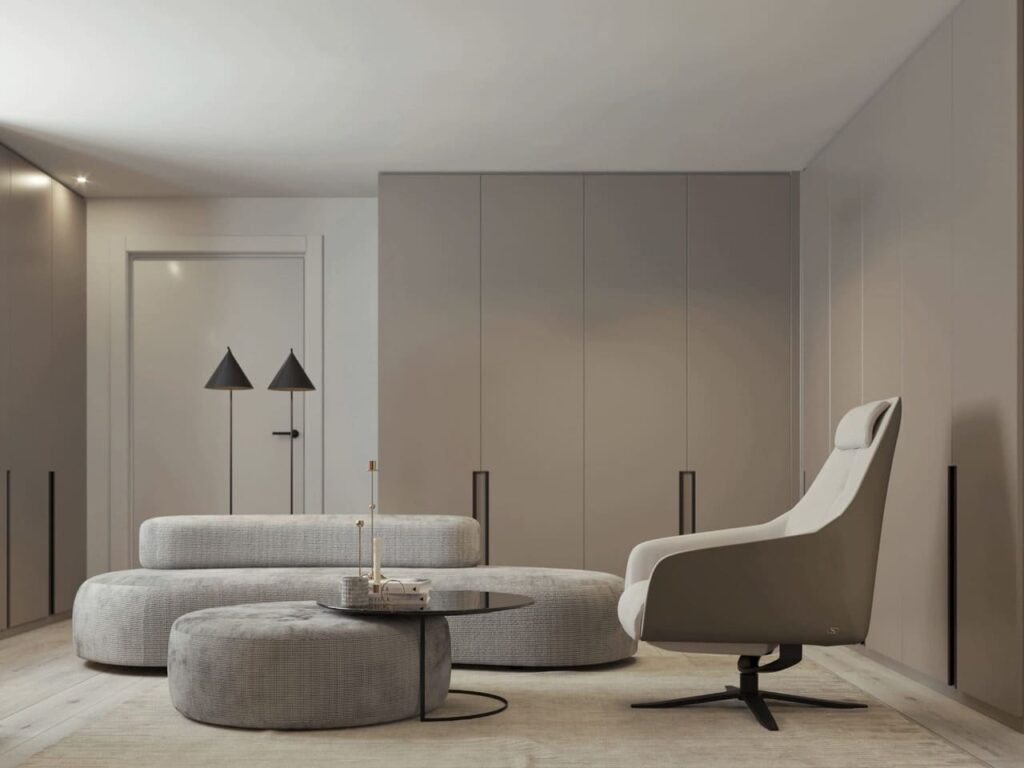
Yes, curved furniture is still very much happening. And in 2026, it’s going deeper rather than wider.
One of the clearest trend narratives from global design shows was soft curved forms — from lights to bedheads, everything is being shaped in organic curves. What’s shifting is that it’s no longer just a sofa silhouette. Curves are moving into architecture: rounded doorways, arched cabinetry openings, organically shaped islands.
However — and this is worth noting — designers are starting to push back on arches that don’t belong, stressing the importance of being true to the architecture of the space you actually have, rather than trying to add romance by sticking arches everywhere.
In other words: curves and organic forms are a yes. Forcing them into homes where they feel out of place is a no. If you live in a character villa, work with the architecture rather than against it.
5. The “90% Finished” Philosophy
This one is a genuine shift in how Kiwis are thinking about their homes — and it’s refreshing.
The most sophisticated interiors in 2026 will look deliberately incomplete. The idea is to take a space 80 or 90 percent of the way there, rather than having every little detail fully finished and curated.
Think: a casually draped linen throw instead of a perfectly styled one. Shelves with a few meaningful objects and a little breathing room. A room that invites you to add things over time rather than declaring itself “done.”
The idea that every room should flow seamlessly with a cohesive aesthetic throughout is fading fast — different rooms can and should evoke different moods. A cosy, book-lined study. A playful, maximalist bedroom. A calm, stripped-back kitchen. They can all exist in the same house.
This is a direct reaction against the “full home aesthetic” pushed hard by furniture retailers and social media. Real homes are lived in. They evolve. They reflect the people inside them, not a catalogue.
6. Kitchens Are Getting More Adventurous
The Kiwi kitchen is where interior design is being most boldly rethought in 2026.
Homeowners are continuing to innovate in their kitchens, with induction cooktops currently on trend as Kiwis reluctantly relinquish their gas stovetops. But the really interesting shifts are aesthetic.
Bold cabinetry colours — forest green, deep navy, warm terracotta — are replacing the white-on-white kitchen that dominated for a decade. Benchtops are getting more dramatic: heavily veined stone, porcelain with bold patterning, and timber details making a comeback.
The outdoor kitchen has become part of the interior even though it’s exterior — sometimes the indoor and outdoor kitchens are only divided by a wall, with bifold or sliding doors making it look like the kitchen keeps going through.
For New Zealand’s climate and love of outdoor entertaining, this makes perfect sense. The indoor-outdoor kitchen is essentially the modern evolution of the classic Kiwi barbecue setup — just considerably more stylish.
7. Buying Better, Not More
Across every category — furniture, lighting, textiles, art — the dominant consumer mindset in 2026 is quality over quantity.
Industry observers note that consumers are moving away from disposable furniture trends towards investment pieces that combine durability with aesthetic appeal. This aligns with a broader sustainability shift: buying less but choosing pieces that genuinely last.
In practical terms, this shows up as:
- Choosing a leather sofa that will age beautifully over a fabric one that won’t survive toddlers or pets
- Investing in custom joinery rather than flat-pack furniture that will need replacing in five years
- Seeking out NZ-made ceramics, textiles, and artwork that support local makers and bring genuine character
- Refinishing or reupholstering existing quality pieces rather than replacing them
Furniture crafted from responsibly sourced wood, cork or recycled-fibre rugs, and accessories with a clear material story — these choices age gracefully and feel intentional, not just trendy.
8. The Principal Suite Moment
One of the more aspirational trends hitting New Zealand homes in 2026 is the evolution of the master bedroom into what designers are now calling the principal suite.
This isn’t just rebranding — it reflects a genuine shift in how the main bedroom is being designed and used. Rich colours, cocooning aesthetics, and luxe finishes are defining what’s being called the “forever home” approach to principal suites.
The emphasis is on creating a space that genuinely feels like a retreat — a room with its own personality, its own warmth, distinct from the rest of the house. This means layered lighting (bedside lamps, soft overhead, perhaps a reading nook with its own fixture), rich textiles, and a colour palette that’s moodier and more intimate than the rest of the home.
Boucle bed heads, velvet bedding, a statement pendant, and warm timber flooring: that’s the principal suite in 2026.
The Bigger Picture
Look across all these trends and a clear theme emerges: New Zealand homes in 2026 are becoming more personal, more tactile, and more honest.
The era of designing for resale — neutral, safe, inoffensive — is giving way to homes that reflect the actual people living in them. The era of matching everything from one retailer is being replaced by layering things you love over time. The era of cold perfection is making room for warmth, imperfection, and genuine comfort.
Authenticity is key. You can’t go wrong by embracing your personal taste — if you love something and it’s not “on trend,” that’s okay. Everything comes in cycles, and the most stylish thing you can do is choose an aesthetic that you genuinely love.
That’s always been the spirit of the best Kiwi homes. In 2026, it’s finally the mainstream.
Start small: pick one room, one texture, one colour that genuinely excites you. The rest tends to follow.