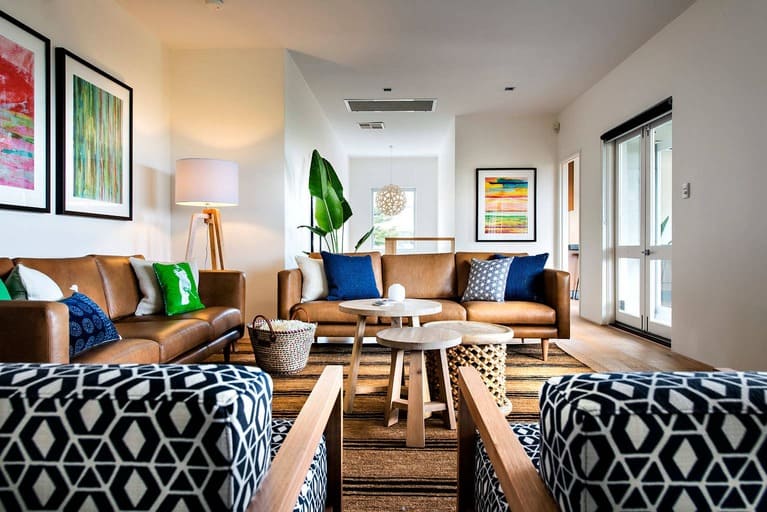
Renting in New Zealand in 2026 is the reality for a huge proportion of the population. In Auckland alone, nearly half of all households rent. Wellington, Christchurch, Hamilton — the story is similar across every major city. And yet, most of the home interiors content produced in this country assumes you own the place, can knock down a wall whenever inspiration strikes, and have a renovation budget to match your ambitions.
For renters, that content is basically useless.
Here’s the truth that not enough people say clearly: you can make a rental look genuinely, deeply beautiful without touching a wall, drilling a single hole, or risking a dollar of your bond. It takes a different set of strategies than a full renovation. But those strategies exist, they work, and the best of them produce results that would genuinely impress a visiting interior designer.
This guide is built specifically for New Zealand renters — one that accounts for the Residential Tenancies Act, our specific rental market reality, and the kinds of apartments, flats, and houses Kiwis actually live in.
First Things First: Know the Rules Before You Touch Anything
Most styling guides skip straight to the pretty ideas. That’s a mistake, because understanding what you can and can’t do under New Zealand tenancy law is what keeps you out of bond disputes.
Under the Residential Tenancies Act, any changes beyond purely temporary, damage-free interventions need either explicit permission in your tenancy agreement or written approval from your landlord. That means a text or email — something you can point to later. The good news is that most landlords are far more open to this than tenants assume, particularly if you frame it as an improvement rather than a modification. Ask first, get it in writing, and then get creative.
What’s almost always fine without asking: freestanding furniture, rugs, plants, plug-in lighting, and anything held up by removable adhesive strips. What needs permission: painting (even with the plan to repaint back), drilling beyond minor picture hooks, and replacing any fixed fittings.
With that sorted — here’s how to make a rental feel like home.
The Rug Rule
If you do only one thing from this guide, buy a rug. Nothing else changes the feeling of a room as dramatically, as quickly, or as reversibly.
In New Zealand rentals, you’re often dealing with tired carpet, cold tiles, or uninspiring laminate. A well-chosen rug placed over any of these transforms the room completely. It defines the space, adds warmth underfoot, introduces texture and colour, and makes everything look intentional rather than default. The key detail most people get wrong is size — going too small. A rug that tucks neatly under the front legs of all the main furniture in a living room reads entirely differently to a small one floating awkwardly in the middle of the floor.
Natural fibres — jute, wool, cotton — work particularly well in New Zealand homes because they suit our earthy, nature-connected aesthetic and tend to layer well over existing flooring. In a bedroom, a rug extending at least 60 centimetres beyond each side of the bed turns an ordinary space into something that feels genuinely considered. This is a single purchase that travels with you to every rental you’ll ever live in, paying dividends each time.
Lighting Is Everything (And Most Rentals Get It Wrong)
Even the most beautifully styled room will look flat and uninviting under bad lighting. Most New Zealand rentals come with harsh overhead fittings that cast a cold, clinical light over everything. The fix isn’t complicated — it’s just a matter of adding warmth from multiple sources rather than relying on a single ceiling light to do all the work.
A plug-in floor lamp in the corner of the living room costs as little as sixty dollars from Kmart and changes the entire mood of the room in the evenings. Table lamps on side tables and bookshelves — using warm white bulbs in the 2700 to 3000 Kelvin range — create that layered, golden-hour feeling that makes a home feel genuinely inviting rather than functional. Battery-operated LED strips tucked behind shelves or under kitchen cabinets add surprising depth without any wiring.
One often-overlooked rental hack: swapping the shade on an existing pendant fitting. Store the original shade carefully and replace it with something interesting — a rattan pendant, a linen drum shade, a sculptural form picked up from an op shop. This costs almost nothing and dramatically changes the character of the room. The key principle is simple: never rely on the overhead light alone once the sun goes down.
Walls Without Nails
Blank, white rental walls are the most obvious marker of a space that hasn’t yet been made into a home. But the options for dressing them without damage are genuinely better in 2026 than they’ve ever been.
For lighter pieces, 3M Command strips hold more than most people realise — framed prints, small mirrors, and decorative objects can all go up without leaving a mark. For a more relaxed, gallery-style feel, leaning artworks against the wall on a mantle, shelf, or directly on the floor creates a deliberately casual effect that looks far more considered than a rigid grid of hung frames. If your rental has picture rail moulding — common in older New Zealand villas and character apartments — you can hang multiple pieces at varying heights using picture rail hooks and wire, with no nails required at all.
Removable peel-and-stick wallpaper has quietly become one of the most powerful tools in a renter’s kit. A single feature wall in a bedroom or living room using a quality temporary wallpaper can cost under $150 for most rooms and takes an afternoon to install. The transformation is remarkable — and the paper comes away cleanly without any damage to the underlying surface. Smart Tiles work on the same principle for kitchen splashbacks and bathroom surrounds, turning a tired rental kitchen into something that actually looks intentional.
For the walls that genuinely need something but can’t have anything fixed to them, large-scale plants help more than people realise. A tall monstera or a fig tree in a beautiful pot placed in a corner draws the eye upward and fills vertical space in a way that makes the blank wall behind it feel deliberate rather than empty.
Curtains: The Highest-Impact Swap Nobody Does
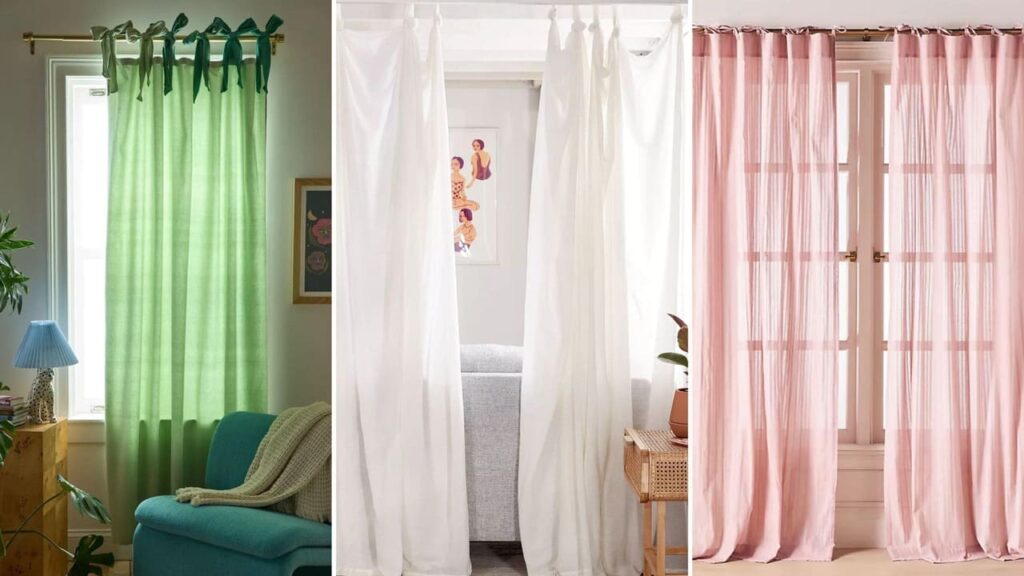
Curtains are the most underrated styling opportunity in a rental, and consistently the most neglected. The synthetic, sagging, slightly-too-short panels that come standard in most Kiwi rentals actively undermine every other decorating effort in the room. Replacing them is completely reversible — you simply store the originals and reinstall before you leave — and the impact is immediate.
Linen or linen-look curtains in a warm neutral tone change the quality of light in a room and make the ceiling feel higher. The trick is in the hanging height: mount them as close to the ceiling as possible rather than just above the window frame, and extend the rod well beyond the window on each side. This single adjustment makes every window look larger and every room feel more spacious — and it costs nothing extra if you’re buying new curtain hardware anyway.
Tension curtain rods make this completely hole-free. They’re readily available at Bunnings and The Warehouse, fit a wide range of window widths, and go with you when you leave.
Furniture That Works as Hard as You Do
Investing in beautiful furniture while renting isn’t wasteful — it’s actually smarter than the alternative. Everything you buy for a rental goes with you. A quality sofa, a solid timber dining table, a well-made bed frame — these things improve every place you live, not just the current one, and they hold their value far better than a sequence of cheap temporary replacements.
The most useful mindset shift for renter-decorators is thinking about furniture as your layer of the home — the part that sits on top of whatever the landlord left behind and transforms it into something that reflects who you actually are. Freestanding shelving solves inadequate built-in storage (extremely common in older NZ homes). A movable kitchen island or butcher’s block adds the bench space that almost every Kiwi rental kitchen lacks. A room screen or open bookshelf used as a divider can create definition between sleeping and living areas in open-plan apartments where the original layout makes no concessions to privacy or coziness.
The dual-purpose principle is especially worth applying here. An ottoman with a lift-up lid handles the throw blankets and board games that would otherwise colonise the floor. A sofa with a fold-out bed makes a small flat genuinely functional for guests. In spaces where every square metre counts — and in New Zealand rentals, every square metre usually does — furniture that does two jobs is always worth the extra thought.
Plants, Pots, and the Living Layer
There is a particular quality that well-placed plants bring to a rental that no other element quite replicates. They signal care. They grow and change. They make a space feel like someone genuinely inhabits it rather than merely occupies it. And unlike almost everything else in this guide, they respond to you — which creates a relationship with a space that static objects simply can’t.
In New Zealand rentals, the practical note is simply this: always use drip trays, because water damage to floors and surfaces is a very real bond risk. Beyond that, the approach is about choosing scale and placement thoughtfully. One large statement plant — a monstera in a handmade ceramic pot, a fiddle leaf fig in a corner of the living room — does more for a space than five small plants dotted around without intention. Trailing plants on shelves work beautifully in rentals because they add volume and softness without needing additional floor space.
The pot matters almost as much as the plant. A modest pothos in a beautiful handthrown ceramic vessel looks significantly better than an expensive plant in a plastic nursery container. Hunt op shops, check Felt NZ, visit local ceramics markets — the right pot is often more important than the right plant.
The Shower Head Swap: Underrated and Completely Portable
Here is the rental upgrade almost nobody talks about but everyone should know: the shower head. Many New Zealand rental bathrooms have outdated, low-pressure fittings that turn the daily shower into a lukewarm trickle. Replacing the shower head is surprisingly simple, requires no landlord permission in most cases (it’s a fixture swap, not a modification), and costs between forty and one hundred and fifty dollars at Bunnings or Mitre 10.
A rainfall or multi-setting shower head transforms the most-used room in your home in about twenty minutes. And when you move out, you simply reinstall the original and take yours to the next place. It’s a small upgrade that touches your life every single day — which is ultimately the best argument for any renter-friendly improvement.
The Bigger Picture
Styling a rental beautifully isn’t about pretending you own the place. It’s about refusing to live in limbo while you wait for the conditions to be perfect — and understanding that the right set of tools makes a genuine home possible within almost any constraints.
The best-styled rental apartments in New Zealand don’t announce themselves as rentals. They feel personal, warm, and full of character — because their occupants understood that home is something you create, not something that comes with the lease.
Start with a rug. Fix the lighting. Replace the curtains. Add plants. Bring in furniture that’s yours, that matters to you, and that will go with you wherever life in this country takes you next.