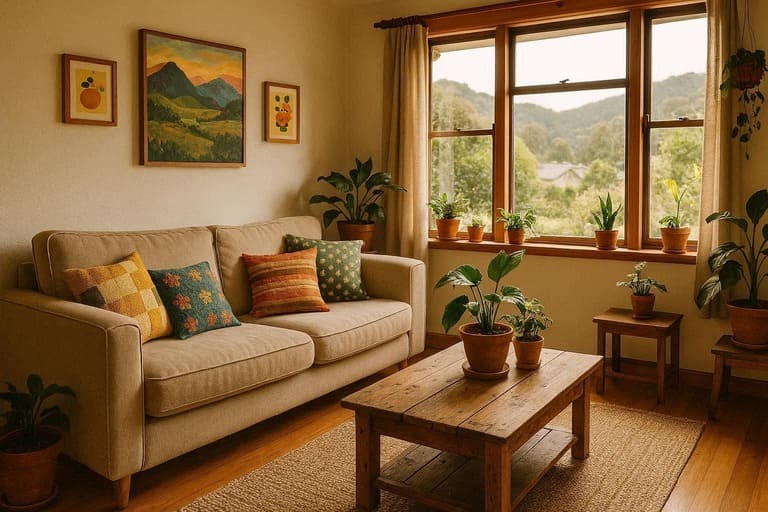
Let’s be honest: home decor in New Zealand can feel wildly expensive. You walk into a furniture store, fall in love with a linen sofa, and then quietly put it back when you see the price tag. Or you scroll through Instagram accounts of beautifully styled Kiwi homes and wonder how on earth people are affording it all.
Here’s the thing — most of them aren’t spending what you think they are.
The best-looking homes in New Zealand right now aren’t the ones with the biggest budgets. They’re the ones with the most intentional choices. And once you know the tricks, decorating beautifully on a tight budget is genuinely achievable — whether you’re renting a flat in Wellington, settling into your first home in Hamilton, or refreshing a bach that hasn’t been touched since 2005.
This guide is packed with practical, honest ideas that actually work in a New Zealand context. No generic advice. No “just pop to a boutique homeware store” suggestions. Real ideas, real budget, real results.
Why Budget Decorating Often Looks Better
There’s something worth saying upfront: rooms that are carefully assembled over time — where every piece was considered and chosen with intention — almost always look more interesting than rooms kitted out in a single shopping trip.
The “buy everything matching from one store” approach produces rooms that feel flat and corporate. Budget decorating, done well, forces you to mix old with new, expensive with cheap, handmade with store-bought. That contrast is exactly what makes a room feel alive.
So if you’re working with a limited budget, you’re not starting at a disadvantage. You’re starting with the conditions that produce the most interesting spaces.
1. Paint: The Highest Return on Investment in Your Home
If there’s one thing you spend money on, make it paint. Nothing else in home decorating gives you as dramatic a transformation for as little cost.
A single weekend and a couple of tins of Resene or Dulux can completely change the feeling of a room. And in 2026, the colour options are genuinely exciting — deep earthy tones, warm off-whites, sage greens, and dusty blues that bring real sophistication without the designer price tag.
Where to put your painting budget:
- A single feature wall in a moody, rich tone — Resene’s Lisbon Brown, or a deep navy — can anchor a whole room
- Painting cabinetry in the kitchen or bathroom is one of the most cost-effective renovations you can do; a dated cream kitchen becomes something entirely different in forest green
- Ceilings — often overlooked, but painting a ceiling in a warm white or subtle tone dramatically changes how a room feels
- Trims and skirting boards — crisp, freshly painted trims make an entire room look more considered
One thing many competitors in the NZ home content space don’t mention: always test paint samples across different times of day before committing. New Zealand light varies significantly between regions and between morning and evening. That warm sage might look beautiful in Auckland at noon and dull in Dunedin by 4pm.
2. Trade Me, Op Shops, and the Art of Second-Hand Hunting
This is where the real budget magic happens in New Zealand — and frankly, it’s also where the most interesting pieces live.
Trade Me is an absolute goldmine for quality furniture at a fraction of retail price. People move cities, downsize, or simply upgrade and sell perfectly good pieces for next to nothing. A genuine rimu dining table that would cost $2,000+ new can regularly be found for under $300. Leather sofas, solid timber bookshelves, vintage lighting — it’s all there if you’re patient.
Op shops (Salvation Army, Red Cross, local hospice shops) are equally worth regular visits. The quality varies, but the prices are low enough that even a speculative purchase rarely feels like a waste. A $15 ceramic vase that turns out to be perfect is a very different risk to a $150 one.
Tips for second-hand success:
- Set up Trade Me alerts for specific items you’re looking for — a dining table, a bedside lamp, an armchair
- Visit op shops in wealthier suburbs; the donations tend to be higher quality
- Don’t overlook things that need minor work — a $40 timber chair that needs re-staining is still a $40 chair
- Facebook Marketplace and local community groups are increasingly competitive with Trade Me and often have free or very cheap items from people who just want them gone
The Folders NZ and Your Home and Garden teams both point to secondhand shopping as the most effective sustainable decorating strategy — and the budget case is equally strong. You’re giving beautiful existing items a new lease on life while keeping money in your pocket.
3. Textiles: The Fastest Way to Transform a Room
Soft furnishings do more work than almost anything else in a room. A new set of cushion covers, a throw blanket, or a rug can completely change how a space feels — and textiles are one of the easiest areas to find quality at low prices.
Budget textile upgrades worth prioritising:
- Cushion covers (not full cushions — buy quality inserts once and replace covers seasonally)
- A good rug — even a modest jute or cotton rug from Kmart or The Warehouse defines a seating area and adds warmth underfoot
- Linen-look curtains — replacing cheap synthetic curtains with linen or linen-look fabric makes a rental or starter home feel instantly more considered
- Throws — draped over a sofa or armchair, a good-quality throw adds texture and colour without committing to a new piece of furniture
One thing to look out for: Kmart NZ has genuinely raised its game on homewares in the last couple of years. Some of their cushion covers and throws are indistinguishable from items costing three or four times as much. The trick is knowing what to buy from budget stores (textiles, basic storage, candles) and what to invest in (rugs, larger furniture pieces, lighting).
4. Plants: The Original Budget Decorator
No other decorating tool does as much for as little as a good plant. A trailing pothos on a shelf, a statement monstera in a woven basket, or a cluster of small succulents on a windowsill adds life, colour, and texture instantly.
And in New Zealand, plants are absurdly easy to come by cheaply. Trademe regularly has plant listings. Community Facebook groups do endless plant swaps. Friends and neighbours will almost always give you a cutting of something. Even Bunnings and The Warehouse carry decent ranges at reasonable prices.
Plant tips for budget decorators:
- Cuttings from friends cost nothing and grow surprisingly fast — pothos, tradescantia, spider plants, and monstera all propagate easily
- A cheap plant in a beautiful pot punches far above its weight — the pot is often more important than the plant
- Don’t buy pots at homeware stores; check The Warehouse, Kmart, op shops, and even the supermarket garden section for significantly cheaper options
- Group plants together for impact — three small plants clustered in a corner read as a design choice; one isolated small plant just looks forgotten
5. Lighting: The Upgrade Most People Skip
Lighting is probably the most underutilised budget upgrade in New Zealand homes. People spend thousands on furniture and then use a single overhead light that makes everything look flat and harsh.
You don’t need to rewire anything. Small changes make a significant difference:
- Floor lamps — a single floor lamp in the corner of a living room transforms the mood of the whole space at night; you can find decent ones from $60–$100 at Kmart or Target
- Table lamps — adding a lamp to a bookshelf or side table creates warmth and depth
- Warm bulbs — if you’re still using cool white LED bulbs, swap them for warm white (2700–3000K); this single change makes most rooms feel immediately more inviting
- Fairy lights and LED strips — yes, they’re basic, but soft warm fairy lights behind shelving or along a headboard create a genuinely cosy atmosphere for almost nothing
The goal is layered lighting: ambient (ceiling), task (a reading lamp), and accent (something that creates a glow). You don’t need expensive fittings to achieve this.
6. Rearranging and Editing: The Free Renovation
Before spending any money, try this: take everything off your shelves and surfaces, put it all in a pile, and only put back what you genuinely love or need.
Then rearrange the furniture.
This sounds almost too simple to mention, but it’s remarkable how often a room feels stuck simply because the layout hasn’t been questioned since the last move-in. Pulling a sofa away from the wall, turning a bed to face a different direction, or swapping furniture between rooms can make a home feel completely different without spending a dollar.
The editing principle: too much stuff in a room makes it feel smaller and more cluttered than it is. Removing items is often more powerful than adding them.
Donate, sell, or store anything that doesn’t genuinely belong in a space. What’s left will automatically look more considered — because it is.
7. DIY That’s Actually Worth Doing
Not all DIY is equal. Some projects save money, look great, and are genuinely satisfying. Others eat up a weekend and look amateurish. Here’s an honest take on what’s worth attempting in the NZ context:
Worth doing yourself:
- Painting walls, ceilings, and cabinetry (transformative results, accessible skill level)
- Framing and hanging art or prints (a $5 print from a local market in a $15 frame can look stunning)
- Reupholstering chair seats — just the flat seat pad, not the whole chair; this is beginner-level and very effective
- Building simple floating shelves — basic timber from Bunnings, painted to match walls
Better left to someone with experience:
- Full furniture reupholstery (it’s easy to make this look worse, not better)
- Tiling (the grout lines will torture you forever if they’re uneven)
- Anything involving plumbing or electrical
The key principle: do the DIY that’s genuinely forgiving of imperfection, and outsource the rest.
8. Buy Local, Buy Once
One last idea — and it applies even when you’re on a budget. New Zealand has a thriving community of makers: ceramicists, weavers, printmakers, woodworkers. Their work isn’t always cheap, but it’s often more affordable than people assume, and it lasts.
Platforms like Felt NZ and The Poi Room are dedicated to NZ-made goods. Local craft markets (most cities have regular ones) are brilliant for finding a ceramic mug, a small print, or a handmade candle that costs $25 and brings more genuine character to a shelf than a $60 imported equivalent.
Buying one beautiful, locally made piece occasionally is a far better strategy than filling your home with cheap imported items that will look dated in two years.
The Bottom Line
Decorating beautifully on a budget in New Zealand is not about sacrificing style. It’s about being more deliberate than someone with an unlimited credit card — and that deliberateness almost always produces better results.
Start with paint. Hunt second-hand. Add plants. Fix your lighting. Edit ruthlessly. Do it gradually, and let the space evolve.
The best Kiwi homes don’t look expensive. They look considered. And that costs nothing but time.