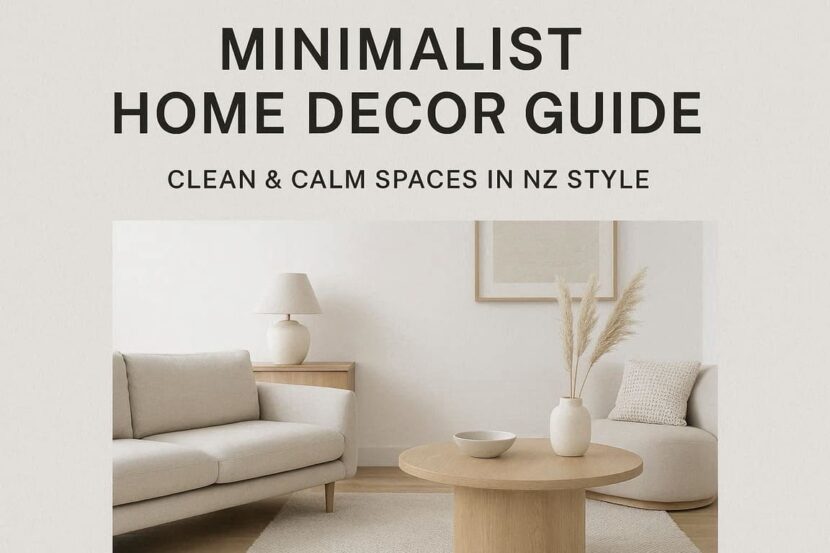
Minimalism has a reputation problem in New Zealand. Mention it and most people picture stark white rooms, a single orchid on a concrete bench, and the vague feeling that you’re not allowed to sit down. Cold. Performative. The kind of space that photographs beautifully and lives miserably.
That version of minimalism — the Instagram kind, imported wholesale from Scandinavian design blogs and filtered through an anxious need to signal taste — has very little to do with what actually works in Kiwi homes. And it explains why so many people who are genuinely attracted to the idea of simpler, calmer spaces end up dismissing minimalism entirely, convinced it’s not for them.
Here’s the reframe worth making: the best minimalist homes in New Zealand in 2026 are not sparse. They’re not austere. They don’t feel like showrooms or galleries or the kind of place where a children’s drawing on the fridge would constitute a design violation. They feel warm, considered, and profoundly restful — because every object in them has earned its place, and nothing is there by default.
That’s the version of minimalism this guide is about.
Why Kiwi Minimalism Is Different from What You’ve Seen Online
Minimalist interiors are still popular in New Zealand — but in a warmer, more relaxed way. NZ interiors now combine minimal layouts with cosy materials and natural textures. That distinction sounds subtle but it changes everything about how you approach the style.
The cold, clinical minimalism that dominated the 2010s was essentially a reaction to maximalism — it stripped everything out in a kind of aesthetic overcorrection. Kiwi minimalism in 2026 is a different project entirely. It’s not about removing things until the room feels empty. It’s about removing things until the room feels right. The goal is calm, not bareness. Warmth, not sterility. A room where you exhale when you walk in, not one where you feel vaguely judged.
Interior design in 2026 is not about dramatic statements or fast-moving trends. The shift is toward spaces that feel calm, grounded, and genuinely supportive of everyday life. This is the spirit Kiwi minimalism inhabits — and it’s why so many NZ designers are producing spaces that technically qualify as minimalist without looking anything like the European archetypes that word usually conjures.
The Palette Question: Warm Beats White
The first and most consequential decision in a minimalist room is colour — and this is where most guides go wrong by defaulting to pure white. White has its place, but in New Zealand homes, especially those with south-facing rooms or in the cooler, damp conditions of the South Island, cold white reads as clinical rather than calm. It’s the colour of hospitals and rental kitchens, not sanctuary.
Instead of cool whites or stark contrasts, 2026 leans into warmth and depth. A soft neutral base layered with earthy tones through cushions and artwork creates a palette that feels grounded and calm rather than flat or cold. This is the palette logic of New Zealand minimalism: warm off-whites, soft taupes, sandy beiges, and the muted greens that echo the native bush. Not a single dramatic colour statement, but a layered warmth that the room breathes out rather than announces.
Pantone’s 2026 Colour of the Year, Cloud Dancer, is a soft, airy white described as a “billowy, balanced white” designed to bring calm to a frenetic society discovering the value of quiet reflection. It’s telling that the global colour authority chose something this restrained — it validates exactly the direction New Zealand’s best designers have been moving toward for several years.
The practical instruction is simple: if you’re repainting for a minimalist aesthetic, reach for Resene’s warm whites and off-whites rather than the pure, blue-toned whites. Try Half Blanc, Triple Sea Fog, or Merino. Pair them with natural timber and you have the foundation of every calm Kiwi interior that actually works.
Texture Is Doing the Work That Colour Usually Does
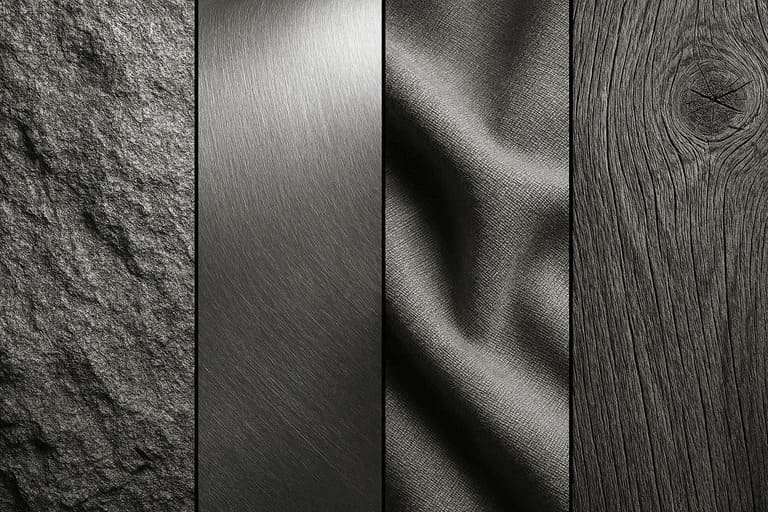
Texture plays a leading role in interiors moving into 2026. Rather than relying on bold colour or high gloss finishes, interest is created through tactile materials — through the rug, cushions, upholstery, and timber details. These layers add warmth and richness without overwhelming the space. Texture allows a room to feel considered and lived in, while still remaining visually quiet.
This is the secret that separates a genuinely good minimalist room from one that simply looks unfinished. In a room with a restrained colour palette, texture carries all the visual weight. A rough-weave jute rug against smooth concrete floors. Linen cushions against a boucle sofa. A handthrown ceramic lamp base on a polished timber surface. The contrast between textures creates interest and depth without introducing colour or complexity — which means the room stays calm while also feeling rich and alive.
Layering different timbers adds dimension, richness, and a sense of crafted character to any space. In a minimalist room, mixing timber tones — a pale oak shelf beside a darker rimu side table, for instance — achieves something that perfectly matching them never quite does. It looks collected rather than designed, which is exactly the feeling worth pursuing.
The Editing Process: What to Remove, and How
The most underrated skill in minimalist decorating isn’t choosing what to add — it’s learning to remove things without the room feeling cold or impersonal. This is where most people get stuck. They know the room is cluttered. They’re not sure what to take away without losing the warmth they’ve built.
The most useful framework is the question every object in a room should be able to answer: does this earn its place? Not sentimentally — every object survives that test — but functionally and visually. Does it do something useful? Does it bring you genuine pleasure to look at? Is it beautiful enough to earn the visual attention it occupies?
Anything that fails both questions gets stored, donated, or sold. Not thrown away — some things have sentimental value that transcends design — but removed from the visual field. A drawer, a storage box, a wardrobe. Out of sight isn’t the same as gone.
What typically remains after a serious edit: a small number of genuinely meaningful objects, quality furniture that earns its keep, and enough breathing room between things that the eye can rest. That last element — the space between objects — is something most people severely underestimate. In minimalist design, negative space is not empty space. It’s active. It gives the objects around it room to be noticed.
The Furniture Principles That Make It Work
Minimalist rooms succeed or fail on the quality of the furniture inside them. In a maximalist room, a mediocre piece disappears into the surrounding energy. In a minimalist room, every piece of furniture is fully visible and fully scrutinised. There is nowhere to hide.
This doesn’t mean expensive. It means considered. A single solid timber dining table chosen with care will always look better in a minimal room than four pieces of flat-pack furniture chosen quickly. Furniture crafted from responsibly sourced wood, cork or recycled-fibre rugs, and accessories with a clear material story age gracefully and feel intentional, not just trendy. That quality of looking intentional — chosen, rather than happened upon — is what minimalist interiors require above everything else.
The proportions of furniture matter enormously in spare rooms. Pieces that are too small look lost. Pieces that are slightly oversized — a generous sofa, a wide dining table — fill a minimalist room with confidence rather than tentatively occupying space. Curved and tactile fabrics define contemporary interiors — rounded forms and relaxed presence read as warm rather than formal. In a minimal room, soft curves take the edge off the simplicity and stop the space from feeling rigid or institutional.
One principle worth applying across every room: let each space have one genuinely beautiful thing. Not a focal point in the old interior design sense — not a feature wall or an accent colour — but a single object that you genuinely love. A ceramic bowl. A piece of art that matters to you. A chair that is the most comfortable thing you’ve ever sat in. Minimalism doesn’t ask you to live without beauty. It asks you to be selective about where beauty lives.
Room by Room: What Kiwi Minimalism Looks Like in Practice
The principles above apply across every room, but they translate differently depending on the space.
In the living room, the single most impactful minimalist move is clearing the coffee table entirely and then putting back only two or three genuinely considered items. A ceramics piece, a candle, one book you’re currently reading. The rest goes. This sounds extreme until you try it — the room immediately feels twice as large and twice as calm.
The bedroom is where Kiwi minimalism tends to reach its most natural expression. Quality bedlinen in a warm neutral — linen in natural or oat, or a soft cotton percale — does more for a bedroom’s feeling than almost any other single investment. Keep surfaces clear except for the essentials: a lamp, a book, a glass of water. The room should feel like the most restful place in the house, because sleep is where we all need calm most.
The kitchen is where minimalism meets its hardest test, because kitchens are inherently functional and accumulate objects by necessity. The goal here isn’t a bare bench — it’s a bench where only the things you use every day live. The coffee machine, yes. The fruit bowl, yes. Everything else goes behind closed doors. Use open shelving to display a curated collection of ceramics, books, and plants — but avoid clutter by choosing quality over quantity. In a kitchen, that means the open shelving holds a few beautiful things, not everything that didn’t fit in the cabinets.
The Things That Competitors Miss
Most minimalism content in New Zealand right now falls into one of two camps. The first is the purely aesthetic — beautiful photography of spare rooms that tells you nothing about how to actually live in them. The second is the organisational — decluttering systems, drawer dividers, storage solutions — which mistakes tidiness for calm and treats minimalism as a cleaning problem rather than a design philosophy.
Neither camp addresses the emotional dimension of the style. The reason people are drawn to minimalist spaces in 2026 isn’t primarily aesthetic. It’s because modern life is genuinely overwhelming, and the prospect of coming home to a space that doesn’t demand anything from you — that simply holds you, quietly — is more appealing than it has ever been.
That’s the real offer of Kiwi minimalism. Not a style to adopt but a feeling to pursue. Calm you can walk into. Space you can breathe in. A home that gives back rather than takes.
Everything else — the warm whites, the textured linens, the carefully chosen ceramics — is just the vocabulary. The sentence it’s trying to speak is simple: you can rest here.