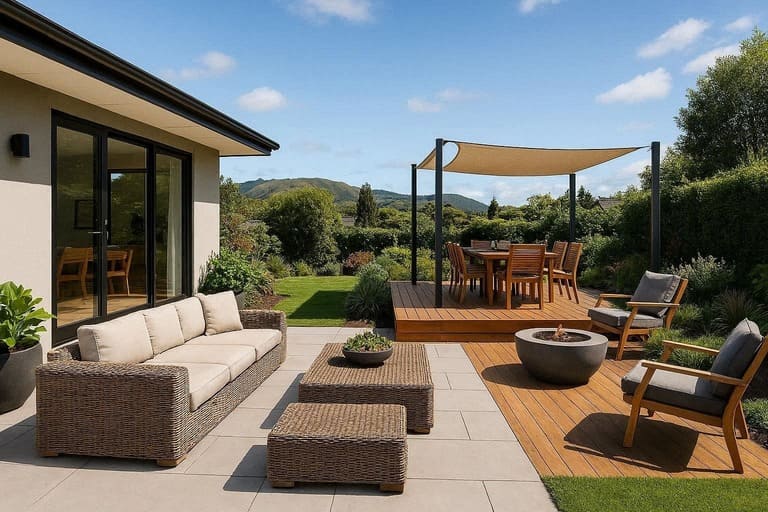
Ask any New Zealander to describe their ideal home and somewhere in the answer — usually early — there will be a mention of outdoor space. A deck, a patio, somewhere to sit with a coffee in the morning or host a barbecue on a Saturday evening. The outdoor living area is not an add-on to the Kiwi home. It is part of its identity.
And yet, for a country that builds its entire lifestyle mythology around being outdoors, New Zealand homes have a surprisingly complicated relationship with their own exterior spaces. Decks rot and go unreplaced for years. Patios get poured and then left as bare concrete slabs with nothing on them. Beautiful backyards sit unused because the connection between the house and the garden was never properly designed. The gap between what Kiwis want from their outdoor spaces and what most of those spaces actually deliver is wider than it should be.
That gap is closing fast. Outdoor living design in New Zealand in 2026 is genuinely exciting — and this guide is here to show you what’s working, what’s worth investing in, and how to think about your outdoor space in a way that most builders and landscapers never explain.
The Thing About New Zealand’s Climate That Changes Everything
Most international outdoor living content is useless for Kiwi conditions, and the reason comes down to weather. American patio guides assume a climate that doesn’t exist here. European garden content assumes cold winters with defined seasons. Neither accounts for what New Zealand actually offers: a climate that is glorious but profoundly unpredictable, where a perfect summer afternoon can become a horizontal rain event inside forty minutes, and where the same deck might be baking in sun and battered by wind on consecutive days.
The only problem with a deck or patio in New Zealand’s variable climate is that it can be usable for only part of the year, and even in summer, wind and rain may drive you indoors. This is the reality that shapes everything about good outdoor design here — and it’s why the most significant shift in Kiwi outdoor living over the past decade has been the move away from simple open decks and toward what designers call the outdoor room.
The outdoor room — a covered, sheltered space that blurs the line between inside and outside — is the single concept most worth understanding if you want an outdoor area that gets used year-round rather than just on the handful of genuinely perfect days each season delivers.
The Outdoor Room: Why Covered Is the Future
Homes that once had small windows facing the wrong way for the sun are now being opened up with bi-folding glass doors leading onto expansive decks or patios. Fire pits, patio heaters, protective screens and outdoor rooms have made outdoor living an all-year-round lifestyle choice.
The key ingredient in all of this is shelter. A covered outdoor space changes the fundamental equation of New Zealand outdoor living — suddenly, a rainy afternoon in July doesn’t mean the space is abandoned, and a blazing February noon doesn’t drive everyone back inside with sunburn.
The most popular covering solution in New Zealand right now is the louvred roof. The Eclipse louvre roof allows sunlight to stream through in the summer while providing sealed coverage in the winter — and that adaptability is precisely why louvred systems have taken over from fixed pergolas and polycarbonate roofing as the default choice for Kiwis who want genuine year-round flexibility. You can open the louvres on a warm evening to watch the stars and close them in five seconds when the rain arrives. It is not a cheap option, but it is transformative.
For those working with tighter budgets, a well-designed pergola with a shade sail or quality outdoor blinds achieves much of the same result at a fraction of the cost. The principle is the same regardless of the specific product: protect the space from the elements without closing it off entirely, and you have created something genuinely usable across all four seasons.
Decking Materials: An Honest Assessment
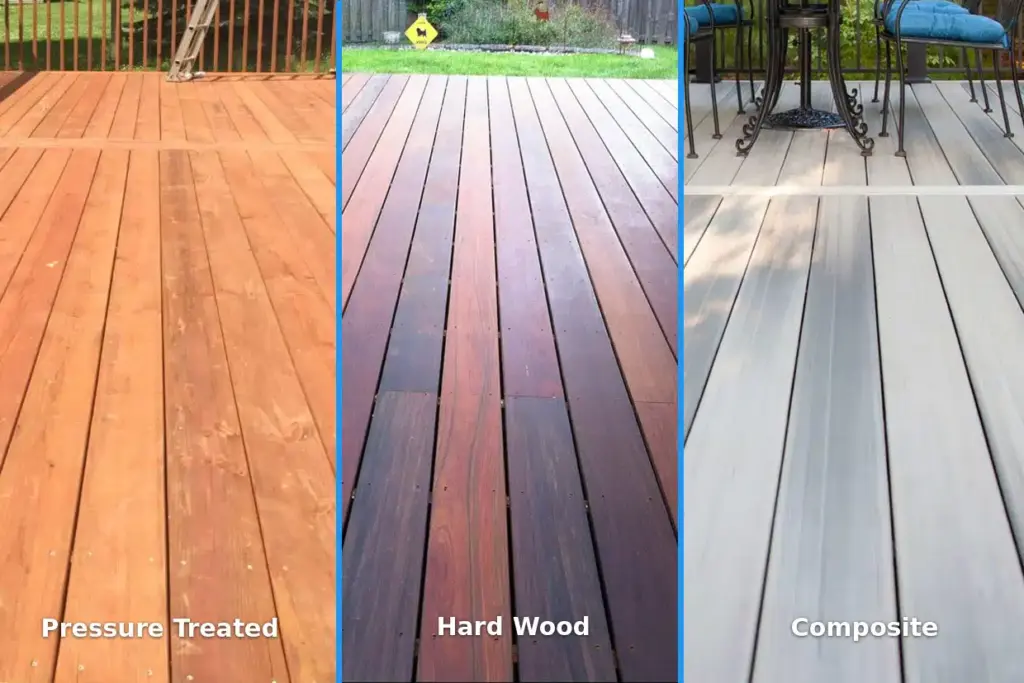
Decks are synonymous with Australian and New Zealand outdoor living. But the material choices available in 2026 are more varied — and more interesting — than they were even five years ago, and the old default of treated pine deserves some serious competition.
Timber remains the most beautiful decking material by a meaningful margin. The grain, the warmth underfoot, the way it weathers into silver-grey if left untreated or deepens in colour with oil — nothing else quite replicates it. Spotted gum is one of the most attractive decking materials, with a lovely grain and minimal staining requirements. Teak is the best-performing hardwood but comes with a hefty price tag. For a mid-range timber option that performs well in New Zealand conditions, oiled pine treated correctly and maintained annually is a reasonable starting point — but it does require that maintenance commitment.
Composite decking has moved decisively from a niche product to a mainstream choice, and composite decking is top of the list for sustainability because it’s made from recycled plastic and wood fibres, and is both durable and easy to maintain. The early composite products looked obviously synthetic. Current generation composites are significantly more convincing, and for busy families who don’t want to be oiling their deck every year, the appeal is obvious.
Concrete — either poured, as pavers, or as polished slabs — has found a genuine place in contemporary New Zealand outdoor design. It suits the clean, modern aesthetic that many newer homes are pursuing, pairs beautifully with timber furniture and greenery, and requires almost no maintenance beyond an occasional hose-down. The limitation is underfoot feel in winter — concrete holds cold in a way that timber never does — but in northern New Zealand especially, this rarely matters enough to be a dealbreaker.
The Layout Question: Zoning Outdoor Spaces That Actually Work
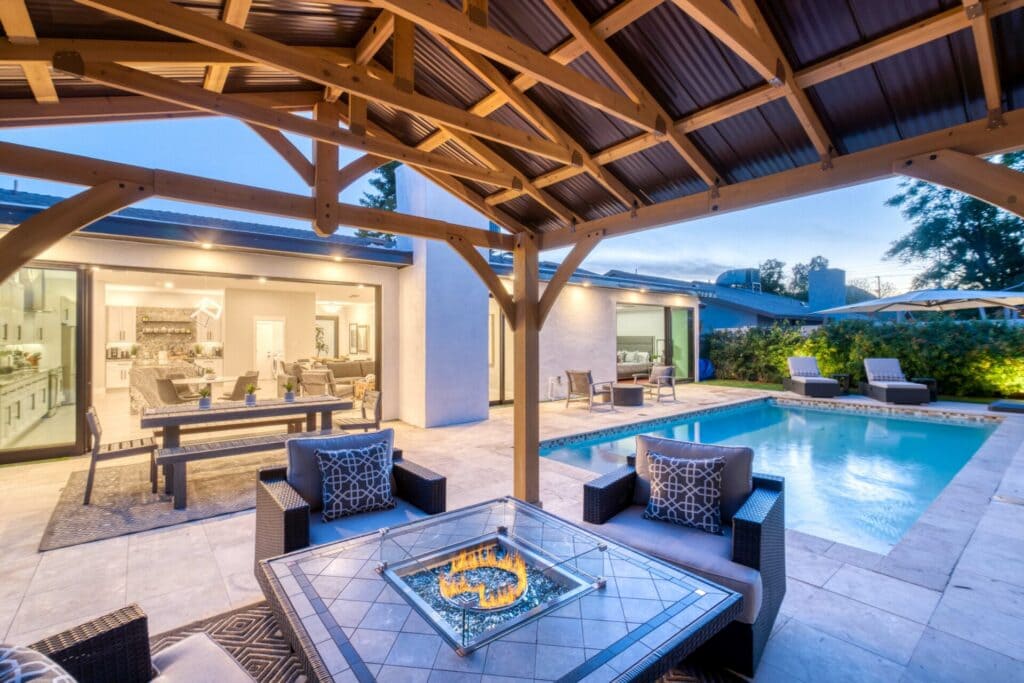
One of the most common mistakes in New Zealand outdoor design is treating the deck or patio as a single undifferentiated space. A large timber platform with a table and chairs in the middle is better than nothing — but it rarely becomes the space where family life genuinely gravitates. The outdoor areas that get used constantly are the ones that have been zoned thoughtfully, with different areas serving different purposes.
An aesthetically stunning multi-level deck serves a practical purpose by creating distinct areas for different activities — one level might serve as the cooking and dining area, while another level has a spa pool and lounge space. Multi-level designs are particularly well-suited to the sloping sections that are so common in Auckland, Wellington, and the hilly parts of every New Zealand city. Rather than fighting the gradient, a thoughtfully designed multi-level deck works with it — turning what might seem like a challenging backyard into one of the most interesting outdoor spaces on the street.
Even on a flat section, the principle of zoning applies. A dining area positioned near the kitchen connection, a lounge area oriented toward sun and away from the prevailing wind, and a separate zone for the fire pit or spa pool — these distinctions make an outdoor space feel like a designed environment rather than a default rectangle. Outdoor rugs, changes in floor level, pergola posts, and planting all contribute to defining zones without requiring physical walls.
The Outdoor Kitchen: From BBQ to Full Culinary Setup
New Zealand’s love of outdoor cooking has evolved considerably from the classic standalone Weber on a concrete slab. Outdoor kitchens are heating up backyards throughout New Zealand as Kiwis discover the pleasures of cooking and entertaining outside all year round.
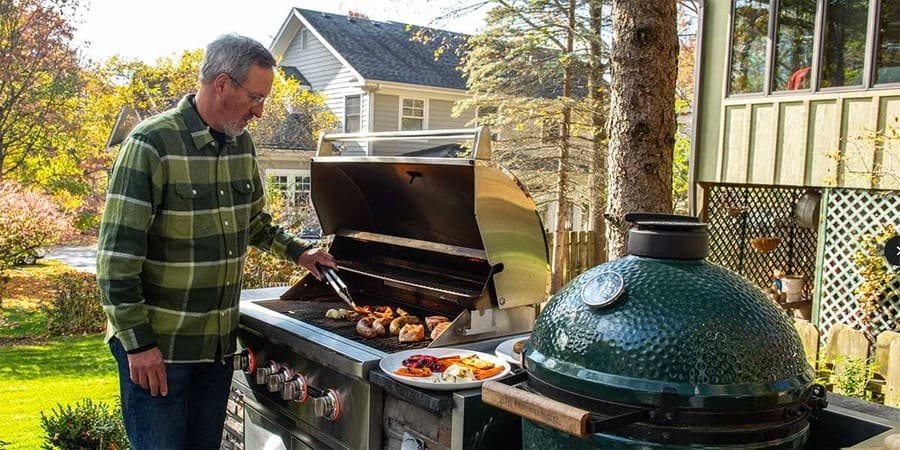
Modern minimalist outdoor kitchen in a New Zealand home might include a built-in barbecue or pizza oven, stone benchtops, a small sink with running water, a bar fridge, and enough preparation space to actually cook a full meal outside rather than ferrying dishes back and forth from the indoor kitchen. This isn’t just an aspirational luxury — in homes where the outdoor space is treated as a genuine second living area, an outdoor kitchen transforms the way the space gets used. Weeknight dinners move outside in summer. Weekend cooking becomes an event rather than a chore.
The key design principle for outdoor kitchens in New Zealand is weather protection above everything else. An outdoor kitchen exposed to the elements will deteriorate quickly regardless of the quality of the appliances — a cover overhead and some wind protection on the sides are not optional extras but fundamental design requirements.
Styling the Space: Where Most Outdoor Areas Fall Short
Here is where most New Zealand outdoor spaces lose the thread. The structure is built, the decking is down, the roof is on — and then the space is furnished with a single outdoor setting from a hardware store and left at that. The result is functional but flat, and it rarely becomes the place where the household naturally gathers.
The outdoor spaces that work — the ones that become genuine extensions of the interior and that people gravitate toward without being asked — are styled with the same attention as the rooms inside. An outdoor rug defines a seating area and adds warmth underfoot. Scatter cushions in weather-resistant fabrics bring colour and comfort. Potted plants at varying heights soften hard surfaces and bring the garden into the sheltered space. Outdoor lighting — string lights overhead, lanterns on tables, low-level path lighting — transforms an evening outdoor space from somewhere you can technically sit to somewhere you actually want to be.
Timber furniture ages beautifully in covered outdoor spaces and connects the outdoor area to the natural materials used inside. The current preference among New Zealand designers is for furniture that blurs the inside-outside distinction deliberately — pieces that could comfortably sit in a living room but are specified for outdoor use. The goal is a space that doesn’t announce itself as the “outdoor area” but simply feels like another room of the house where the ceiling happens to be sky.
The Consent Question: What Kiwi Homeowners Need to Know
A low-level pine deck is approximately $400 per square metre. If your deck is less than 1.5 metres above ground level, a consent is generally not required. That threshold is useful to know upfront, because it determines whether a project requires a licensed building practitioner and a formal consent process or whether it can proceed as owner-builder work.
Anything attached to the house, any structure over 1.5 metres above ground, and any covered structure over a certain size will typically require a building consent through your local council. This process takes time and adds cost — budget for it honestly rather than hoping it doesn’t apply. The consequences of building without required consent (difficulty selling, potential demolition orders) are not worth the money saved.
For smaller projects — ground-level patios, low-level decks under 1.5 metres, freestanding pergolas under the permitted development thresholds — the process is simpler, though it’s always worth a quick conversation with your local council before you start.
Where to Start
The outdoor living spaces that become genuinely central to Kiwi home life share a common quality: they were thought about as spaces rather than as construction projects. Before the first concrete is poured or the first timber board is ordered, the questions worth sitting with are simple. How will this space be used? At what times of day? In which seasons? By whom? What connection to the indoor spaces matters most? What needs protecting from — sun, wind, rain, neighbours?
Answer those questions honestly and the design decisions that follow become considerably clearer. The materials, the structure, the furniture, the planting — all of it serves the vision of how the space will actually be lived in.
That vision, more than any single product or trend, is what makes the difference between an outdoor area that gets used and one that just gets looked at from the window.