There’s a particular kind of stress that comes from a cluttered home. You know where everything roughly is — until you need it, at which point it’s inexplicably gone. The hallway becomes an obstacle course. The kitchen benches are covered in things that don’t technically have a home. The wardrobe has reached capacity but somehow contains nothing you want to wear.
Sound familiar? You’re not alone. Storage is one of the most common pain points in New Zealand homes — and given our housing reality, it’s not surprising. Kiwi homes are often compact, older, and not exactly designed with modern life’s volume of stuff in mind. A 1930s bungalow was built for people with fewer possessions, fewer appliances, and significantly fewer children’s activities to organise.
The good news: storage design has come a long way. In 2026, the best solutions aren’t just practical — they’re genuinely beautiful, and they work with your home’s existing character rather than against it. This guide walks through the storage ideas that are actually making a difference in real New Zealand homes, room by room.
The Shift in How Kiwis Think About Storage
Before diving into specific solutions, it’s worth understanding how the conversation around home storage has changed recently.
Smart storage solutions, comfort-first furniture, and flexible, personalised styling are among the key trends shaping NZ homes in 2026. The old approach — buying a flat-pack cabinet and hoping for the best — is giving way to something more considered. Storage is now being designed into homes from the beginning, not added as an afterthought.
What’s driving this? A few things. The rise of smaller urban homes and apartments means every square metre genuinely counts. The cost of living has made people more selective about what they own and how they store it. And aesthetically, the goal isn’t to remove personality from your home but to create a balanced space — using multi-purpose storage furniture, decorative baskets, and curated displays of meaningful items rather than overcrowding shelves with random decor.
With that context in mind, here’s where to start.
1. The Entryway: Your Home’s First Test
The entryway — or lack of one — is where most New Zealand homes fail first. In a villa or bungalow, you often step straight from the front door into the living room. In an apartment, there might be a narrow hallway that does the work of an entire mudroom. In both cases, the same problem: nowhere to put bags, coats, shoes, and the general detritus of daily coming and going.
Solutions that actually work:
- Built-in bench seating with lift-up storage underneath — this solves the shoe problem elegantly and gives you a place to sit while putting them on; it can be made to measure for even a narrow hallway
- Wall-mounted hooks at varying heights — adults, kids, bags, and dog leads all have different hanging needs; a row of hooks in different sizes handles all of them
- A tall, slim console cabinet with drawers for smaller items — keys, sunglasses, mail — that would otherwise colonise your kitchen bench
- A coat cupboard if you have the wall space — even a shallow, 30cm-deep cupboard on a hallway wall adds significant storage without meaningfully reducing the corridor width
The entryway principle: anything that takes more than three seconds to deal with when you walk in the door will end up on the floor. Make putting things away frictionless.
2. Kitchen Storage: The Invisible Kitchen Principle
The kitchen is the storage battleground in most Kiwi homes. Appliances, food, dishes, cookware, cleaning products, and the contents of three junk drawers somehow all need to fit into what is often a modest-sized space.
The concept of the invisible kitchen has been gaining popularity — the idea is simple: decluttered kitchen counters that are a dream to come home to and are easy to clean. The goal isn’t to hide your personality — it’s to give every object a home so that the bench can actually be used for, you know, cooking.
The most impactful kitchen storage moves:
- A walk-in pantry or tall pantry cabinet — if your kitchen layout allows any kind of dedicated pantry storage, prioritise it above almost everything else; it transforms daily cooking by putting everything within sight and reach
- Deep drawers instead of lower cabinets — in kitchen renovations, replacing lower cabinets with deep drawers is consistently rated as one of the best decisions Kiwi homeowners make; everything is visible and accessible without getting on your hands and knees
- Pull-out internal organisers — for pots, lids, and baking trays that otherwise pile up chaotically; these make a significant difference in the usability of existing cabinets without requiring new joinery
- Appliance garages — a section of bench with a roller door or cabinet above it conceals small appliances while keeping them accessible; the bench stays clear, the toaster and coffee machine don’t disappear into a cupboard
- Magnetic knife strips and wall-mounted spice racks — vertical wall space above the bench is almost always underused; reclaiming it for frequently used items frees up drawer and cabinet space for things that can’t go on the wall
Smart storage and flexible layouts help maximise every square metre — ideal for both compact apartments and sprawling family homes. In the kitchen specifically, that often comes down to the quality and organisation of your joinery more than the quantity of it.
3. Living Room Storage: Hiding in Plain Sight
Living rooms accumulate things. Remotes, books, chargers, candles, kids’ toys, board games, the throw that never quite makes it back to the basket — all of it gradually filling the surfaces and floor space of what should be your most relaxed room.
The best living room storage is the kind that doesn’t look like storage.
What’s working in modern Kiwi living rooms:
- Media units with closed lower storage — rather than open shelving that becomes a display of cable chaos, closed lower cabinets keep the technology tidy while the open upper shelves hold the things you actually want to see
- Ottomans and coffee tables with storage — a blanket box or storage bench that functions as both seating and storage for stowing away linens, cushions, or everyday clutter is one of the most practically useful pieces of furniture in any living room; it’s also where the remotes will eventually be found
- Built-in window seats — in older NZ homes with bay windows or alcoves, a window seat with lift-up storage underneath is genuinely one of the most beautiful and practical additions you can make; it uses space that would otherwise be awkward, and creates a reading nook in the process
- Floor-to-ceiling bookshelf walls — a full wall of shelving is one of the most dramatic storage moves possible in a living room, and it also functions as art; styled with a mix of books, objects, and plants, it reads as an interior design choice rather than a storage solution
The rule for living room storage: if you can see it, it should look good. If you can’t see it, it should be genuinely accessible — not just stashed and forgotten.
4. Bedroom Storage: Thinking Vertically
The bedroom is where most Kiwi homeowners run out of wardrobe space and surrender, buying a freestanding clothes rack and calling it a day. There’s a better way.
- Floor-to-ceiling wardrobes — the single biggest storage upgrade in a bedroom is taking joinery all the way to the ceiling; the space above a standard wardrobe top is almost always wasted and can hold seasonal items, luggage, or extra linen
- Storage beds — a bed with drawer storage underneath or a lift-up base adds significant capacity in a bedroom without using any additional floor space; particularly valuable in smaller bedrooms where a freestanding chest of drawers would crowd the room
- Bedside tables with concealed storage — many contemporary homes in New Zealand prefer compact bedside tables with hidden storage to maintain a clean and organised space; a simple wooden or matte-finished table can blend seamlessly into modern bedroom settings while providing essential functionality
- The walk-in wardrobe — where the layout of a house allows for it (a large bedroom, a spare corner off the hallway, or an underutilised alcove), a walk-in wardrobe is genuinely life-changing; even a small one of 1.5 x 2 metres provides far more usable storage than a standard fitted wardrobe
One often-overlooked bedroom storage opportunity: under the bed. In many NZ bedrooms, a good-quality set of under-bed storage containers (flat, lidded, on wheels) can house an entire season’s worth of clothing — freeing up the wardrobe for what you’re actually wearing right now.
5. Laundry and Utility: The Most Underdesigned Space
The laundry is consistently the most storage-neglected room in the New Zealand home — and consistently the one that creates the most daily frustration when it’s not working. Similarly, the bathroom often suffers from clutter and poor organization, making daily routines more stressful than they need to be.
A few investments here pay dividends every single day:
- Floor-to-ceiling cabinetry above the washing machine and dryer — this space is almost always underused; good upper cabinetry transforms a basic laundry into an organised utility space that can also house cleaning products, medicine, craft supplies, and anything else that doesn’t belong in the main living areas
- A fold-down ironing board built into the cabinetry — saves floor space and means the ironing board isn’t permanently set up in the corner as a clothes horse
- Sorting baskets or drawers built into the joinery — dividing laundry at the source (darks/lights/delicates) saves a step that otherwise happens on the floor
- A wall-hung drying rack on a retractable pulley — particularly useful in New Zealand’s weather, where outdoor drying isn’t always possible; a rack that folds up against the ceiling when not in use takes up zero floor space
6. Outdoor and Garage: Don’t Ignore the Perimeter
New Zealand’s love of outdoor living means bikes, surfboards, garden tools, camping gear, and sports equipment often compete for space in garages that are also expected to fit a car.
- Wall-mounted bike racks — getting bikes off the floor is the single most effective garage space-saver; a row of wall-mounted hooks triples the usable storage footprint
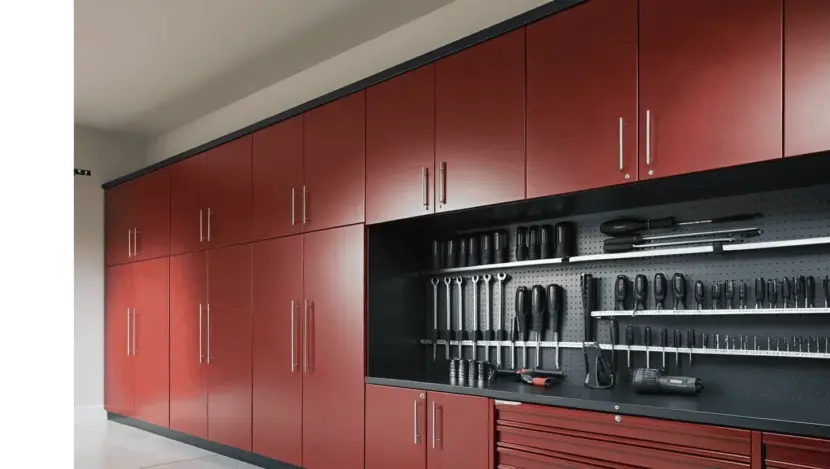
- Slatwall or pegboard systems — these modular systems allow tool and equipment storage to be arranged and rearranged as needs change; far more flexible than fixed shelving
- Overhead ceiling storage — the ceiling space in a garage is almost always empty; purpose-built overhead racks store seasonal items, luggage, and camping gear safely out of the way
- A lockable outdoor storage shed — for gardens and lawns, getting tools out of the garage into a dedicated shed is a simple move that transforms garage organisation overnight
The Principles Behind Great Storage Design
Look across every room and a few consistent principles emerge:
Go vertical. Floor space is limited; ceiling height almost always isn’t. Take joinery to the ceiling, stack solutions upward, and reclaim the zones that most homes leave empty.
Close the doors. Open shelving looks beautiful in design magazines and collects clutter in real homes. Closed storage keeps visual noise down and makes a home feel calm.
Design for daily use. The things you use every day should be the easiest to access. The things you use seasonally can be harder to reach. Don’t let camping gear block the school bags.
Buy quality once. As we move into 2026, smart storage solutions are no longer a luxury — they’re a necessity. With the growing demand for multifunctional furniture and eco-friendly materials, homeowners are increasingly seeking storage options that combine both style and practicality. A well-made piece of joinery or quality furniture that lasts twenty years is almost always better value than replacing cheap flat-pack every five.
Edit regularly. The most effective storage solution in any home is owning less. A twice-yearly edit — donating, selling, or storing things that no longer earn their place — makes every other storage solution work better.
Where to Start
If you’re feeling overwhelmed, pick one room and one problem. The hallway chaos, the kitchen bench that’s never clear, the wardrobe that closes only under protest. Solve that one thing well. Then move to the next.
Good storage doesn’t happen all at once. It’s built gradually, one thoughtful decision at a time — which is, fittingly, exactly how the best New Zealand homes are made.